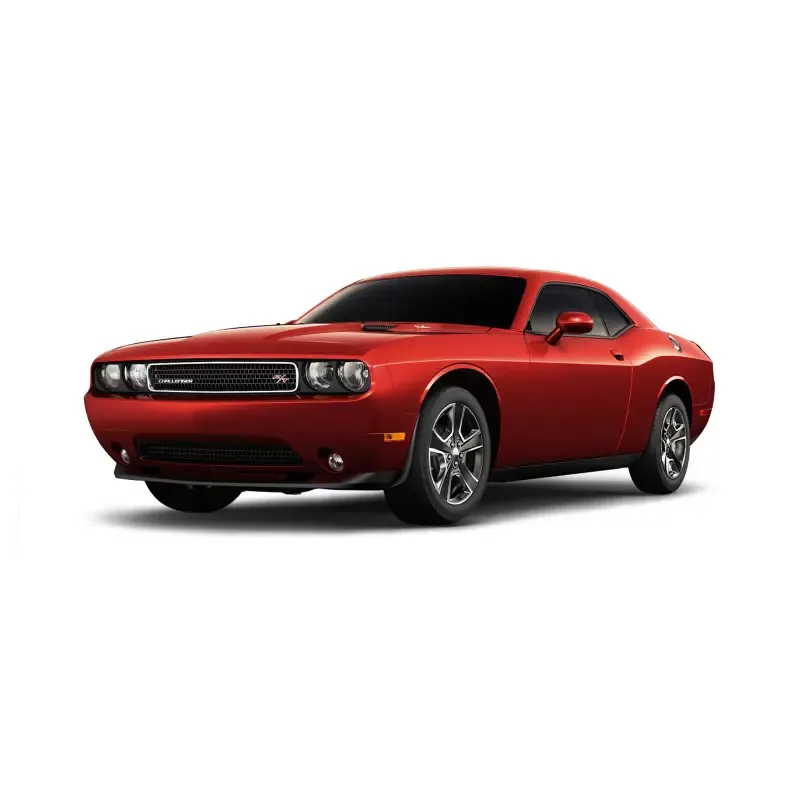
Thumbnail of product Challenger (2013) from brand Dodge
Logo of brand Dodge

Car Dodge Challenger (2013)

The Dodge Challenger (2013) is an iconic car that embodies power and style. This model, manufactured by Dodge, is known for its impressive performance and bold design that attracts all eyes.

The Dodge Challenger (2013) offers an optimized driving experience thanks to its advanced technical features. With a powerful engine and exceptional handling, it is designed for thrill-seekers. Additionally, this vehicle is equipped with numerous safety features to ensure passenger protection.

To enhance your experience, two documents are available: a user manual and safety instructions, providing you with all the necessary information to fully enjoy your Dodge Challenger.

In summary, the Dodge Challenger (2013) is a perfect choice for those seeking performance, safety, and style on the road.

Manuals of product Challenger (2013)

8 10

Editorial note

The Dodge Challenger (2013) stands out for its optimal performance, offering a dynamic and responsive driving experience that will delight thrill-seekers. Its iconic design, with bold lines, attracts attention and embodies the spirit of classic sports cars, making it a particularly appealing model. The interior is spacious and well-organized, providing a good level of comfort for the driver and passengers. However, it is worth noting that rear space can be limited, which may affect comfort on long journeys. Additionally, while this model incorporates modern features, some may seem outdated compared to newer vehicles. Regarding handling, the weight of the car can make driving less agile in certain situations, and visibility may be compromised by the design of the hood. Finally, fuel consumption can be high, leading to significant operating costs, even though the reputation of the Dodge brand and the perceived quality of the vehicle make it an interesting choice for enthusiasts. Overall, the Dodge Challenger (2013) is a vehicle that combines performance and aesthetics, but it also has some drawbacks to consider.

Score details

User experience

The user experience is generally positive due to high interior comfort, but the technological features may seem outdated compared to newer models.

Performance

The performance is optimal, offering a dynamic and responsive drive, but fuel consumption can be high.

Design

The iconic design of the Dodge Challenger (2013) catches the eye with its bold lines, embodying the spirit of classic sports cars.

comfort

The cabin is spacious and well laid out, providing a good level of comfort for the driver and passengers, although rear space may be limited.

Usability

The handling can be affected by the weight of the car, making some driving situations less agile, and visibility is compromised due to the design of the hood.

Value for money

Despite potentially high operating costs, the brand's reputation and the perceived quality of the vehicle make it an interesting choice for enthusiasts.


Advantages

Dynamic and responsive driving

Muscular and bold design

Spacious and comfortable interior

Modern and entertaining features

Renowned brand for its quality

Disadvantages

High fuel consumption

Handling affected by weight

Limited rear space

Outdated technologies

Reduced visibility in urban environments

Technical Specifications Challenger (2013)

General Information

Frequently Asked Questions

How can I convert miles to kilometers?
To perform the conversion, know that one mile is equivalent to 1.609344 kilometers, while one kilometer corresponds to 0.62137119 miles. Q: Where is the VIN number on my Dodge? A: The location of the VIN number varies depending on the make and model of the car. It may be engraved or affixed to the chassis. To find its exact position on your Dodge, refer to the owner's manual. Q: What is the VIN number? A: The VIN number is a unique identifier for each vehicle. It stands for Vehicle Identification Number. Q: How often should I have my Dodge serviced? A: Regular maintenance is essential. The maintenance manual indicates the ideal frequency for servicing as well as the items to check. Generally, a major service is recommended every 2 years or every 30,000 kilometers. Q: When should I replace the brake fluid in my Dodge? A: It is advisable to change the brake fluid every two years. Q: What is the difference between E10 and E5 gasoline? A: E10 gasoline contains up to 10% ethanol, while E5 gasoline contains less than 5%. Therefore, E10 has a lower gasoline percentage, making it more environmentally friendly. Q: What should I do if one or more doors won't open from the inside? A: This could be due to the child safety lock preventing the doors from opening from the inside. The mechanism to disable this safety feature varies by make and model. Q: My car radio won't turn on, what should I do? A: If your car radio won't turn on, check that the red wire is properly connected to the ignition power and that the yellow wire is connected to the constant power supply. Q: How do I adjust the seat position in the 2013 Dodge Challenger? A: To adjust the seat in the 2013 Dodge Challenger, follow these steps: 1. For manual adjustment, locate the adjustment bar at the front of the seat and pull it to move the seat. Ensure the seat is locked in place before driving. 2. To adjust the recline of the backrest, lift the lever on the outer side of the seat and adjust it to the desired position. If you have power seats, use the switches to adjust the position to your liking. Make these adjustments only when the vehicle is stationary. Q: Why won't the engine start when I turn the ignition key in the 2013 Dodge Challenger? A: If the engine won't start, first check the fuel level. If the tank is nearly empty, fill it up. Then, ensure the battery is charged. If it is low, try to start with jumper cables. If you have an automatic transmission, follow the steps to clear a flooded engine. For a manual transmission, press the clutch pedal and turn the key. Refer to the manual for more details and follow safety instructions. Q: What should I do if the check engine light comes on in the 2013 Dodge Challenger? A: If the check engine light comes on, observe its behavior. If it is flashing, this indicates a serious problem requiring immediate attention. If the light stays on without flashing, you can continue to drive cautiously, but it is recommended to have the vehicle diagnosed as soon as possible. Contact a qualified technician to resolve the issue. Q: How often should I change the oil in my 2013 Dodge Challenger? A: The recommended frequency for oil changes is as follows: 1. Under normal conditions, replace the oil and filter every 10,000 miles (16,000 km) or every twelve months. 2. Check the oil level and other fluids monthly, as well as the condition of the tires. 3. Follow the oil change system indicators that will alert you when necessary, especially under severe driving conditions. Q: Why does the steering wheel shake while driving the 2013 Dodge Challenger? A: Vibrations in the steering wheel may be due to: 1. A tire imbalance, requiring inspection and balancing. 2. Poor wheel alignment, which needs to be checked and corrected. 3. The condition of the tires, which should be inspected for any damage. 4. Worn suspension components that need to be examined. 5. Braking issues, such as warped rotors. If vibrations persist, consult a professional. Q: Is the manual for the Dodge Challenger (2013) available in French? A: Yes, the manual for the Dodge Challenger (2013) is available in French.
Où se trouve le numéro VIN de ma Dodge ?
L'emplacement du numéro VIN varie en fonction de la marque et du modèle de la voiture. Il peut être gravé ou fixé sur le châssis. Pour connaître sa position précise sur votre Dodge, référez-vous au manuel d'utilisation.
Qu'est-ce que le numéro VIN ?
Le numéro VIN est un identifiant unique pour chaque véhicule. Il signifie Vehicle Identification Number (numéro d'identification du véhicule).
À quelle fréquence dois-je faire réviser ma Dodge ?
Il est essentiel d'effectuer un entretien régulier. Le manuel d'entretien indique la fréquence idéale des révisions ainsi que les éléments à vérifier. En général, une révision majeure est recommandée tous les 2 ans ou tous les 30 000 kilomètres.
Quand dois-je remplacer le liquide de frein de ma Dodge ?
Il est conseillé de changer le liquide de frein tous les deux ans.
Quelle est la différence entre l'essence E10 et E5 ?
L'essence E10 contient jusqu'à 10 % d'éthanol, alors que l'essence E5 en contient moins de 5 %. L'E10 a donc un pourcentage d'essence inférieur, ce qui la rend plus respectueuse de l'environnement.
Que faire si une ou plusieurs portières ne s'ouvrent pas de l'intérieur ?
Cela pourrait être dû à la sécurité enfant qui empêche l'ouverture des portières de l'intérieur. Le mécanisme pour désactiver cette sécurité varie selon les marques et modèles.
Mon autoradio ne s'allume pas, que faire ?
Si votre autoradio ne s'allume pas, vérifiez que le fil rouge est bien connecté à l'alimentation de contact et que le fil jaune est branché à l'alimentation constante.
Comment ajuster la position du siège dans la Dodge Challenger 2013 ?
Pour ajuster le siège de la Dodge Challenger 2013, suivez ces étapes : 1. Pour un réglage manuel, localisez la barre de réglage à l'avant du siège et tirez-la pour déplacer le siège. Assurez-vous que le siège est bien verrouillé avant de conduire. 2. Pour ajuster l'inclinaison du dossier, soulevez le levier sur le côté extérieur du siège et ajustez-le à la position souhaitée. Si vous avez des sièges électriques, utilisez les interrupteurs pour régler la position à votre convenance. Veillez à procéder à ces ajustements uniquement lorsque le véhicule est à l'arrêt.
Pourquoi le moteur ne démarre-t-il pas lorsque je tourne la clé de contact dans la Dodge Challenger 2013 ?
Si le moteur ne démarre pas, vérifiez d'abord le niveau de carburant. Si le réservoir est presque vide, faites le plein. Ensuite, assurez-vous que la batterie est chargée. Si elle est faible, essayez de démarrer avec des câbles de démarrage. Si vous avez une transmission automatique, suivez les étapes pour dégager un moteur noyé. Pour une transmission manuelle, appuyez sur la pédale d'embrayage et tournez la clé. Consultez le manuel pour plus de détails et suivez les consignes de sécurité.
Que faire si le témoin du moteur s'allume sur la Dodge Challenger 2013 ?
Si le témoin de vérification du moteur s'allume, observez son comportement. S'il clignote, cela indique un problème sérieux nécessitant une attention immédiate. Si le témoin reste allumé sans clignoter, vous pouvez continuer à conduire prudemment, mais il est recommandé de faire diagnostiquer le véhicule dès que possible. Contactez un technicien qualifié pour résoudre le problème.
À quelle fréquence dois-je changer l'huile de ma Dodge Challenger 2013 ?
La fréquence recommandée pour le changement d'huile est la suivante : 1. Dans des conditions normales, remplacez l'huile et le filtre tous les 10 000 miles (16 000 km) ou tous les douze mois. 2. Vérifiez mensuellement le niveau d'huile et d'autres liquides, ainsi que l'état des pneus. 3. Suivez les indications du système de changement d'huile qui vous alertera lorsque c'est nécessaire, surtout dans des conditions de conduite sévères.
Pourquoi le volant tremble-t-il en conduisant la Dodge Challenger 2013 ?
Des vibrations dans le volant peuvent être dues à : 1. Un déséquilibre des pneus, nécessitant une inspection et un équilibrage. 2. Un mauvais alignement des roues, qui doit être vérifié et corrigé. 3. L'état des pneus, à inspecter pour détecter d'éventuels dommages. 4. Des composants de suspension usés qui doivent être examinés. 5. Des problèmes de freinage, comme des disques voilés. Si les vibrations persistent, consultez un professionnel.
Le manuel du Dodge Challenger (2013) est-il disponible en français ?
Oui, le manuel du Dodge Challenger (2013) est proposé en français.

Similar products


Discover the technical sheet of Kadett (1937) from Opel and its manuals...
Available manuals:
Discover the technical sheet of S60 R (2004) from Volvo and its manuals...
Available manuals:
Discover the technical sheet of Santa Fe (2019) from Hyundai and its manuals...
Available manuals:
Discover the technical sheet of Impreza (2010) from Subaru and its manuals...
Available manuals:
Discover the technical sheet of Grand Caravan (2014) from Dodge and its manuals...
Available manuals:
Discover the technical sheet of Challenger (2014) from Dodge and its manuals...
Available manuals:
Discover the technical sheet of Durango (2014) from Dodge and its manuals...
Available manuals:
Discover the technical sheet of Journey (2013) from Dodge and its manuals...
Available manuals:
Discover the technical sheet of Charger (2013) from Dodge and its manuals...
Available manuals:
Discover the technical sheet of Mondial Quatrrovalvole (1982) from Ferrari and its manuals...
Available manuals:
Discover the technical sheet of Durango (2013) from Dodge and its manuals...
Available manuals:
Discover the technical sheet of Forester (2010) from Subaru and its manuals...
Available manuals:

More product categories from brand Dodge

More product types from brand Dodge

Presentation of product Challenger (2013) specifications from brand Dodge

General Information

The Dodge Challenger (2013) is an iconic model from the Dodge brand, known for its commitment to quality and innovation in the automotive industry. This vehicle offers remarkable driving performance, combining power and responsiveness for an impressive road experience.

Advantages

Optimal performance: The Challenger (2013) is designed to provide a dynamic driving experience, ensuring an enjoyable and thrilling ride.

Iconic design: Its muscular aesthetic and bold lines make the Challenger a true attraction for sports car enthusiasts, embodying the spirit of classic models.

Interior comfort: The spacious and well-designed cabin ensures a high level of comfort for the driver and passengers, making long journeys more enjoyable.

Advanced technology: Equipped with modern features, this model enhances safety and entertainment, making every trip more pleasant.

Brand reputation: Dodge is synonymous with durability and reliability, inspiring confidence among users regarding the longevity of their vehicles.

Disadvantages

Fuel consumption: The Challenger may exhibit high fuel consumption, which could lead to significant operating costs for drivers.

Handling: Due to its weight, the car may sometimes lack agility, affecting maneuverability in certain driving situations.

Rear space: While the front is comfortable, the space for rear passengers can be limited, making long trips less enjoyable for them.

Outdated technology: Some technological features, although acceptable at the time, may seem obsolete compared to newer models, which can limit the user experience.

Visibility: The design of the hood and blind spots can hinder visibility, posing a challenge when driving in urban environments.